[ ARTIST ]
Sergei Oganov
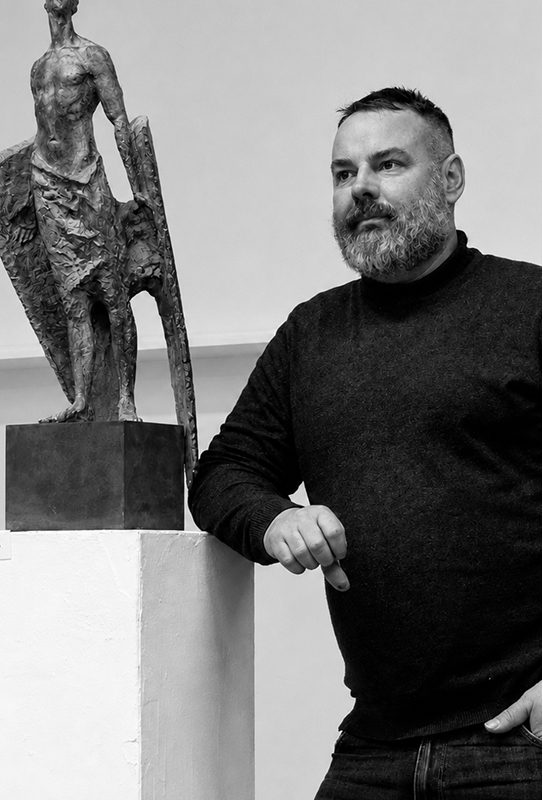
Sergei Oganov is a contemporary Belarusian figurative sculptor whose work combines classical academic training with a distinctive approach to bronze. Rooted in personal experience, mythology and memory, his sculpture belongs to the broader landscape of contemporary Eastern European art.
Emotion in his sculptures is conveyed through silhouette, pose, and gesture. Detail remains only where it carries meaning.
His work ranges from easel sculpture (smaller-scale work) to large-scale works in public space. Among his key monumental works in Belarus are “Voyt” near Minsk City Hall, the monument to Anastasia Slutskaya, the monument to Davyd Gorodensky, and the equestrian monument to Gediminas by the walls of Lida Castle. International projects include “Doors of the Native Home” in Izmir and “Argonauts” in Wuhu, China.
Oganov’s works are represented in museum collections, including the National Art Museum of the Republic of Belarus and the Zair Azgur Memorial Museum-Studio, as well as in private collections in Europe, the United States, and Asia. The artist’s works are also represented on international art platforms including 1stDibs, Artsy, and Saatchi Art.
Bronze and Stone
[ MATERIAL ]
For Oganov, bronze and stone are not simply two materials, but two different ways of constructing form.
Bronze offers plastic freedom. The work first takes shape in clay, then goes through molding and casting, after which the surface is refined through chasing and chemical patination. The sculptor can plan virtually every curve, plane, and transition in advance.
Stone behaves differently. It cannot be returned to its original state. Every strike and every fragment removed is irreversible, while carving creates a texture that cannot be fully reproduced through modeling. It is precisely this resistance of the material that interests Oganov.
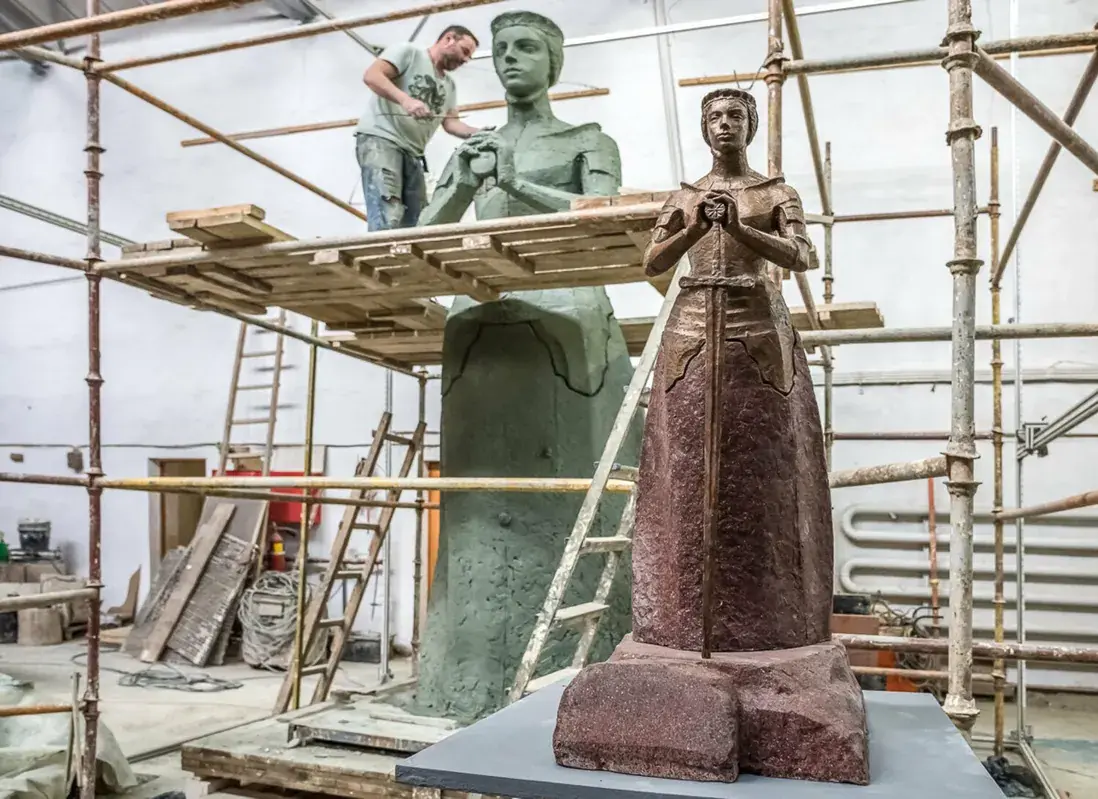
The two approaches came together particularly clearly in the monument to Anastasia Slutskaya, where a massive stone form is combined with a bronze figure. The work required the two parts to be created independently and then fitted together with precision — technical risk became part of the artistic solution.
[ RESEARCH ]
History as a Language
For Oganov, history has never been an abstract source of subject matter.
He was born in Lida, a city whose historic center developed around the medieval Lida Castle. As a child, Oganov spent his holidays there, exploring its still-unrestored towers and perceiving medieval history not as a distant past, but as part of the world around him.
Decades later, a monument to Gediminas, created by Oganov together with Olga Nechay, was installed beside those same castle walls.
His interest in the past has remained part of his working method. Oganov studies historical weapons, armor, horse harnesses, coins, seals, and the material culture of the period, seeking to understand the world he depicts not only visually, but also structurally.
At the same time, historical accuracy is not an end in itself for him. A historical figure remains, above all, material for art.
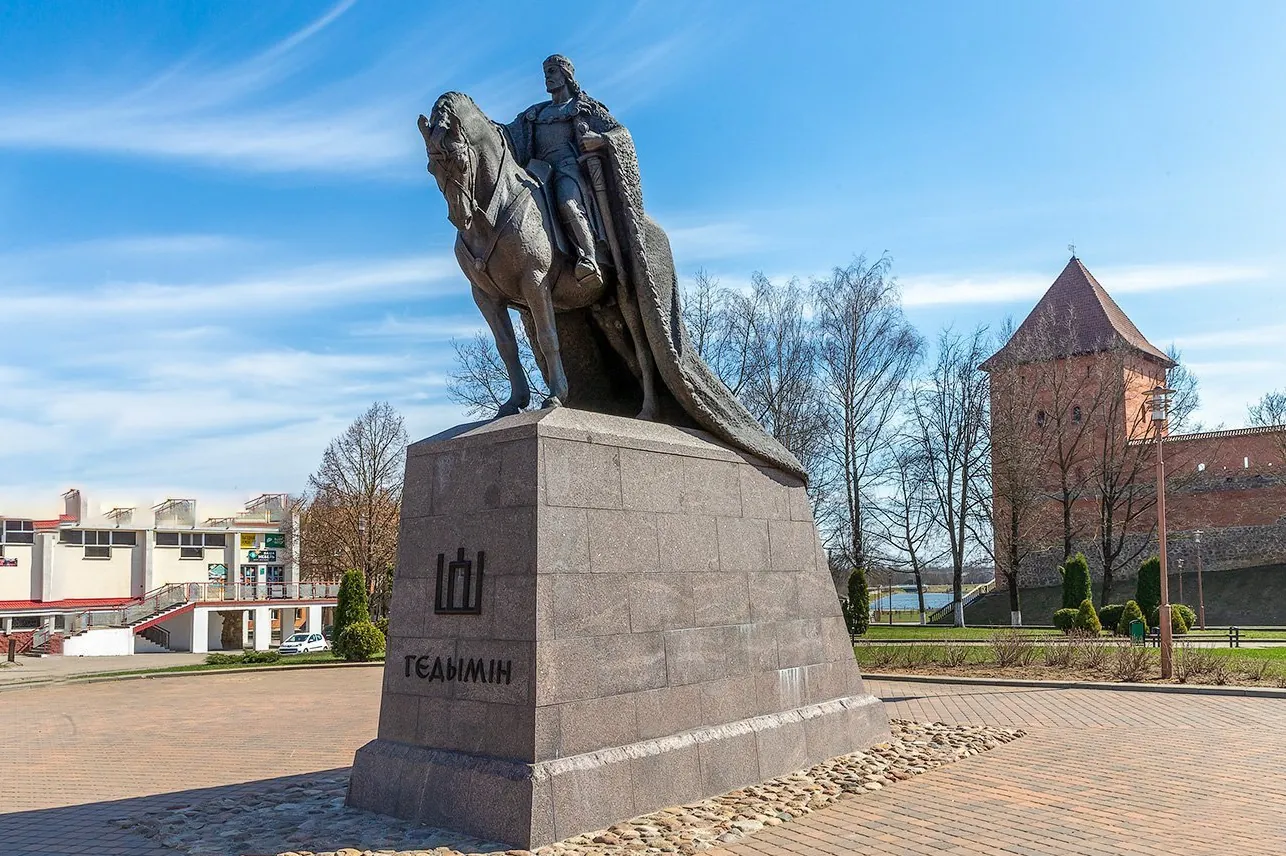
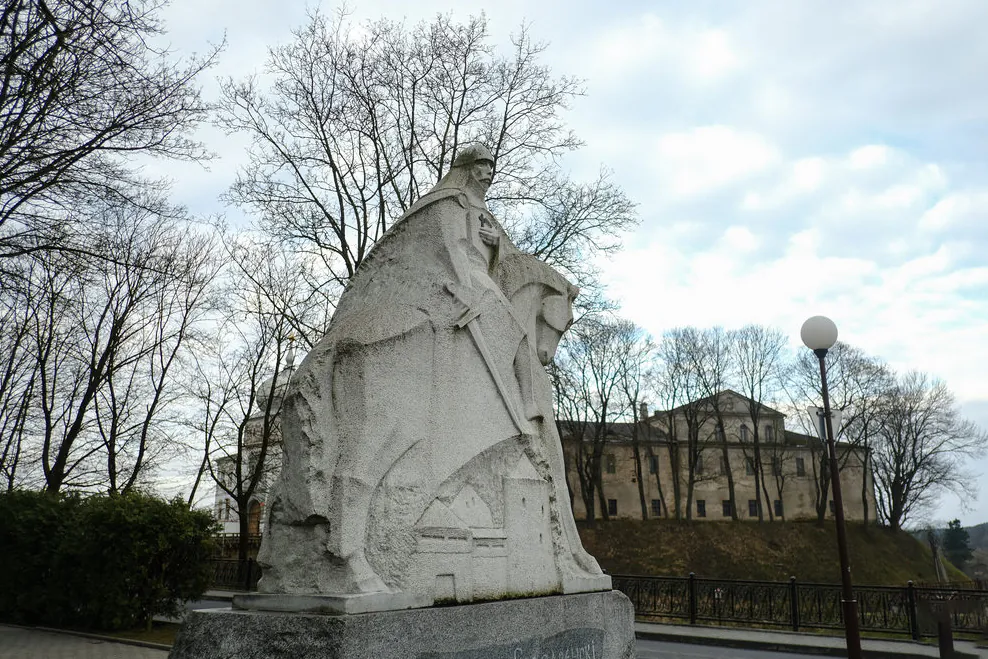
In the monument to Gediminas, an enormous cloak unites the figures of the prince and the horse and becomes a metaphor for the land the ruler gathers and protects. In the monument to Davyd Gorodensky, the hero is not shown in the moment of attack: the lowered sword creates the image of a man who does not seek war, but is ready to defend his land.
History becomes not a reconstruction of the past, but a way of speaking about power, responsibility, protection, choice, and human character.
[ MYTH ]
Heroes and Monsters
Ancient mythology holds a special place in Oganov’s work. For him, ancient Greek myth is not a collection of old stories, but a universal system of images through which it is possible to speak about modern man.
A hero, by definition, must fight monsters and perform feats. But the path to victory often passes through violence, sacrifice, and cruelty. At a certain point, the boundary between hero and monster becomes almost indistinguishable.
In “Rook of Heroes,” the Argonauts set out to perform heroic deeds, but at the same time become hostages to their own fate — people forced to follow a destiny that determines their path in advance. In the work “Heroes,” heroic myth collides with tragic reality: virtually none of the great heroes of antiquity receives a happy ending.
Other works freely combine ancient narratives with imagery from different cultures and eras. Thus, Oganov’s Perseus may take on the features of a Japanese samurai — not as stylization for effect, but as a reminder that myth itself does not belong to any single country or civilization.
Antiquity makes it possible to speak about fundamental human questions beyond any particular state, religion, or historical moment.
“For me, the ultimate measure is universal human values: the value of human life and freedom. What matters most is the human being.”


[ MONUMENTS ]
Monumental Sculpture
2014
The figure of the city voyt beside Minsk City Hall is dedicated to Minsk receiving Magdeburg rights. The project did not begin as a commission: Oganov had the idea of placing the figure of the head of the medieval city beside the town hall long before the work was realized. During the process, the composition was supplemented with a map of historical Minsk and the charter of Magdeburg rights.
2016
Monument to Anastasia Slutskaya in Slutsk
The monument is built around the combination of two fundamentally different materials — bronze and granite. The stone section becomes clothing, architectural mass, and the base of the figure at once, while the bronze preserves the plastic freedom of the human body.
2018
Monument to Prince Davyd Gorodensky in Grodno
The monument is carved from a large block of granite. Oganov rejected the traditional image of an aggressive warrior with a raised sword: Davyd is depicted as a man who retains his strength but uses it only when it is necessary to defend his land.
2018
A memorial to the victims of political repression, created in collaboration. The work required a careful approach to the existing memorial space: the task was not to create an independent, striking object, but to preserve and reinforce the memory of the place itself.
2019
Monument to Grand Duke Gediminas in Lida
An equestrian monument by the walls of Lida Castle, created by Sergei Oganov and Olga Nechay. The main sculptural element is the prince’s enormous cloak, which covers the figures of the man and horse and becomes a symbol of the territory under protection. For Oganov, the work also has a personal dimension: it appeared in the city of his childhood, beside the castle that once shaped his interest in medieval history.
[ INTERNATIONAL ]
International Projects
2021
Doors of the Native Home in Izmir
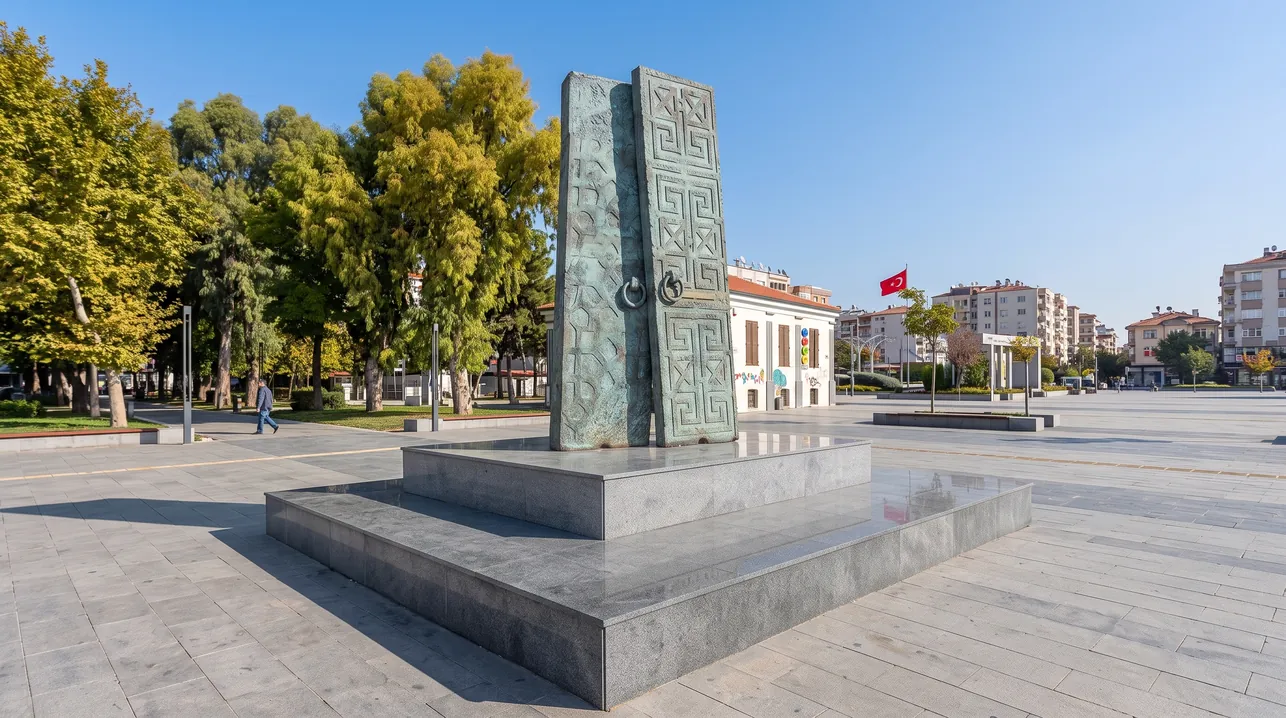
The monument is dedicated to the 1923 Greek-Turkish population exchange. The image of the door becomes a symbol of an abandoned home, memory, and the impossibility of fully returning to the past. The project was selected as part of an international sculpture competition in Izmir.
2022
The monumental composition continues the artist’s long-standing interest in ancient mythology and the image of the hero. The Argonauts appear repeatedly in Oganov’s work — from smaller-scale pieces to large-scale works for public spaces.
[ AWARDS ]
Selected Awards
2021
Second Prize, Triennial of Sculpture, Painting and Graphic Art
2020
National Award in Monumental Art
2020
8th International Izmir Sculpture Competition / Workshop
2020
8th Liu Kaiqu Award International Sculpture Exhibition
2019
New Image of the Era International Sculpture Competition
2018
“Person of the Year in Culture,” Monumental Art category
2016
First Prize, Biennale of Graphics, Sculpture and Painting, Sculpture category
[ EXHIBITIONS ]
Selected Exhibitions
Solo
2021
“Heroes and Monsters”
2015
“XL”
2013
Solo exhibition
2012
Solo exhibition
Selected group exhibitions
2020
New Image of the Era
2019
“Melody of Sculpture”
2014
Avant-gARTe. From Square to Object
2014
“Transformation”
2013
“Relativities”
[ PROFILES ]
External Profiles
[ VIDEO ]
Films and Interviews
Sergei Oganov. About Himself and the Exhibition “Heroes and Monsters”
An interview about mythology, the nature of heroism, the boundary between good and evil, and the series of works that formed the basis of the exhibition.
Sergei Oganov — Workshop
A documentary film about Oganov’s work, his relationship with history and material, the creation of monumental works, and the sculptor’s life between the studio, research, and the realization of large-scale projects.